Can Red Light Therapy for Hearing Loss Restore Your Ears?
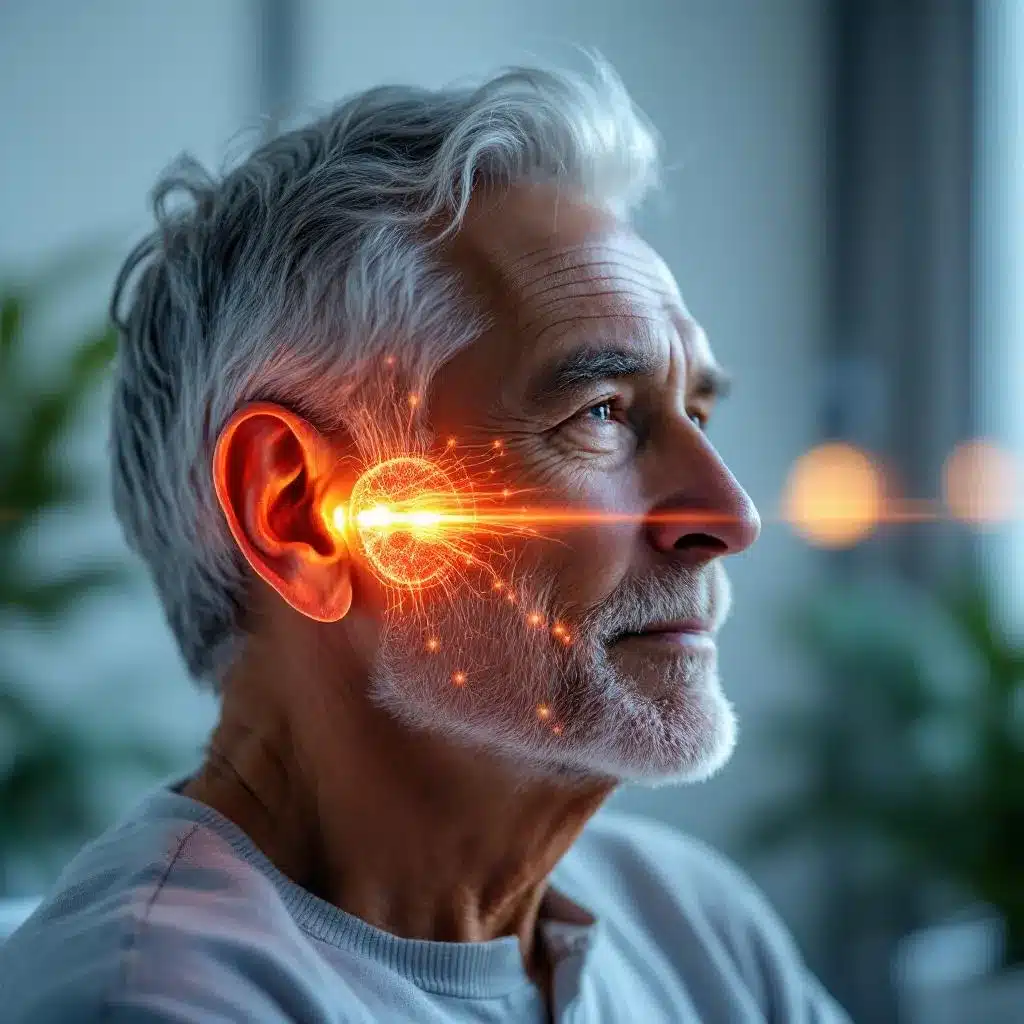
Ever find yourself turning the TV volume up just a tiny bit higher than you used to? Or maybe you’ve noticed that following a conversation in a crowded, clinking restaurant feels more like an Olympic sport than a social outing.
If you’re over fifty, these little shifts in hearing can be incredibly frustrating. It’s more than just a physical change; it’s about feeling a bit disconnected from the people and moments that matter most. While traditional hearing aids are still the “gold standard,” many proactive adults are now looking for gentle, non-invasive ways to support their ear health before things progress.
That’s exactly why red light therapy for hearing loss has been making waves in the wellness world lately. But can specific wavelengths of light really help the delicate machinery of your ears? Let’s cut through the medical jargon and look at the science, the reality, and whether this “light” approach might be the right next step for your hearing journey.
The Science Made Simple: How Red Light Therapy Supports Ear Health
When you hear the word photobiomodulation, it sounds like something straight out of a sci-fi novel. But the core idea is actually quite beautiful—and very natural.
Think of it like this: just as a garden needs sunlight to trigger the energy it needs to grow, our bodies can absorb specific, safe wavelengths of light to jump-start cellular repair. If you’ve been looking into red light therapy for hearing loss, understanding this “charging” process is the first step toward taking back control.

Deep inside your inner ear, you have thousands of tiny, incredibly delicate hair cells. These little guys have a big job: they translate the world’s sounds into signals your brain can understand. But as we age, or after years of loud music and city noise, these cells can start to lose their spark.
How does the light help?
- A “Battery Boost” for Cells: Red light reaches the mitochondria—the “powerhouses” of your cells. It’s like plugging a dying phone into a high-speed charger, giving those struggling hair cells the energy (ATP) they need to repair themselves.
- Calming the Fire: Chronic inflammation is often the silent culprit behind hearing decline. Targeted light helps sweep away inflammatory markers and gets fresh, oxygen-rich blood flowing back where it’s needed most.
- A Safe Environment: By reducing oxidative stress, the therapy creates a “healing bubble” in the inner ear, helping you protect the hearing you still have.
Separating Fact from Hype
We need to be honest here: while the science is exciting, it isn’t magic. To understand what’s happening, we have to look at the cochlea, that spiral-shaped structure in your inner ear.
Research shows that near-infrared light can actually pass through skin and bone to reach this area. In clinical studies, this light has been shown to protect hair cells from further damage. It’s a proactive way to “turn down the noise” of aging.
What red light therapy CAN do:
- Revive “sluggish” or stressed cells.
- Reduce inflammation in the inner ear.
- Improve local blood circulation.
What it CANNOT do:
- It can’t bring back hair cells that have already died.
- It isn’t an “overnight” cure.
For most of us over fifty, it’s best to think of this as a long-term partner for your ear health—a way to slow down the clock and keep things functioning at their best.
At-Home vs. Clinical Treatments: Safe Options for Adults Over 50
If you’re ready to try it, you’ve got two main paths. Deciding which one is right for you depends on your budget, your schedule, and your specific needs.
| Feature | Clinical Sessions | At-Home Devices |
|---|---|---|
| Precision | Medical-grade lasers used by pros. | Consumer-grade, gentle light. |
| Convenience | Requires travel to a clinic. | Use it in your favorite armchair. |
| Cost | Higher per-session fee. | One-time investment in a device. |
| Best For | Moderate issues or complex cases. | Consistent maintenance and mild loss. |
Clinical Sessions: Precision and Peace of Mind
If your hearing issues are more complex, a clinical setting is a great choice. You’ll have a professional ensuring the “dosage” is exactly right.
At-Home Devices: Comfort and Convenience
For many, the ease of a home device is a game-changer. These tools are very user-friendly, but safety is everything. Always look for FDA-cleared devices, follow the timing instructions to the letter, and—this is a big one—never look directly into the light source.
Why You Still Need Your Audiologist
Before you start any new routine, please go see your audiologist. You want to make sure you aren’t dealing with something simple like earwax buildup or an underlying infection that needs traditional medicine. Think of red light therapy as a companion to professional care, not a replacement for it.
Taking the Next Step: Is Photobiomodulation Right for You?
As we get older, staying connected to the sounds of life—the laughter of grandkids, the melody of a favorite song, the hum of a dinner party—is vital. Red light therapy for hearing loss is a promising, gentle tool to help you stay in the conversation.
It fits right into your existing routine and works alongside traditional hearing aids without any downtime or discomfort. It’s about being proactive. Why wait for things to get worse when you can give your ears the support they need right now?
Every hearing journey is a bit different. Talk to your doctor or audiologist, see if this “cellular recharge” makes sense for you, and keep enjoying the beautiful sounds this life has to offer.
FAQ
Is red light therapy actually effective for restoring hearing loss, or is it just a fad?
It’s definitely more than a fad. While it won’t “undo” profound deafness, the science of photobiomodulation is well-documented. By boosting ATP (cellular energy) and blood flow, it helps repair stressed cells and preserve your current hearing clarity.
Is it safe to use light therapy near my ears?
Yes! Because it uses low-level light rather than heat, it’s non-invasive and painless. There are no known major side effects, which makes it a really attractive natural option for long-term management.
How often would I need to do these treatments before I notice a difference?
Consistency is your best friend here. Most people find that 10 to 15-minute sessions, three to five times a week, do the trick. You’ll likely start noticing a difference in clarity or less “ear fatigue” after about four to eight weeks.
Can I use red light therapy instead of my hearing aids?
I wouldn’t recommend it. Think of it this way: hearing aids are like glasses (they help you see/hear better in the moment), while red light therapy is like a vitamin for your cells. They work best as a team.
I suffer from constant ringing in my ears; can this help with tinnitus?
Many people find great relief here! Since tinnitus is often linked to inflammation and cell stress in the cochlea, the soothing effect of red light can often turn down the volume on that persistent ringing or buzzing.
Scientific References
- Effects of photobiomodulation therapy on tinnitus: a randomized, clinical trial
- Photobiomodulation for the Treatment of Inner Ear Diseases
- Evaluation of the Efficiency of Low-Level Laser Therapy in Patients with Sensorineural Hearing Loss
- Effectiveness of low-level laser therapy in patients with tinnitus: A systematic review and meta-analysis
- Photobiomodulation Protects Auditory Hair Cells from Gentamicin-Induced Toxicity