Unlock Peak Performance: The Ultimate Guide to Magnesium Benefits
Been struggling with post-workout recovery or that nagging muscle fatigue that just won’t quit? What if the key to unlocking your true fitness potential wasn’t in a supplement bottle, but right on your plate? It’s true. Many of the most powerful magnesium benefits, from more energy to smoother muscle function, are hiding in plain sight in common, everyday foods.
Let’s walk through exactly which magnesium-rich foods to add to your grocery list to fuel your performance and finally take your results to the next level.
Unlock Peak Performance: Key Magnesium Benefits for Athletes
If you’ve ever felt like you’ve hit a wall during a workout or wrestled with that deep, post-exercise fatigue, your mineral intake could be the missing piece of the puzzle. For anyone who loves to move, magnesium isn’t just another mineral—it’s a foundational part of peak performance.

This powerhouse mineral is a helper in over 300 processes in your body, directly impacting how you create energy and how your muscles work. One of its most important jobs? Its central role in your energy metabolism. It helps convert the food you eat (like glucose) into usable energy. Think of it as the spark plug for your muscles, fueling them so you can push harder, last longer, and keep exhaustion from cutting your workout short.
Beyond just fuel, magnesium is the secret to mastering muscle function. It’s a beautiful partnership: while a mineral like calcium tells your muscles to contract, magnesium is the one that tells them to relax.
Frustrating, isn’t it? Without enough magnesium, your muscles can get stuck in a state of partial contraction. That’s where those painful cramps, spasms, and that feeling of constant tightness come from—the very things that can derail a great training session. By making sure your muscles can fully release, magnesium helps you move more fluidly and keeps those performance-killing issues at bay.
So, what does all this mean for you? Better performance and a much smoother recovery. When your energy is optimized and your muscles are working properly, you’ll see a bigger output during your workouts. But the magic doesn’t stop there. Afterwards, magnesium keeps working by helping to calm your nervous system, lower stress hormones like cortisol, and reduce inflammation, which can mean way less muscle soreness. You don’t just perform better—you bounce back faster, ready to hit your next workout with renewed strength.
Your Fitness-Focused Grocery List: Top Magnesium Foods
Ready to unlock better performance and faster recovery? The real magic happens not just in the gym, but in your grocery cart. Getting enough magnesium is a non-negotiable for an active lifestyle, since this mighty mineral is so vital for muscle function, energy, and even your nerves. Forget complicated supplements for a moment; you can easily get what you need by adding these delicious and powerful foods to your plate.
Here are the heavy hitters for your next shopping trip:
1. Dark Leafy Greens (Especially Spinach)
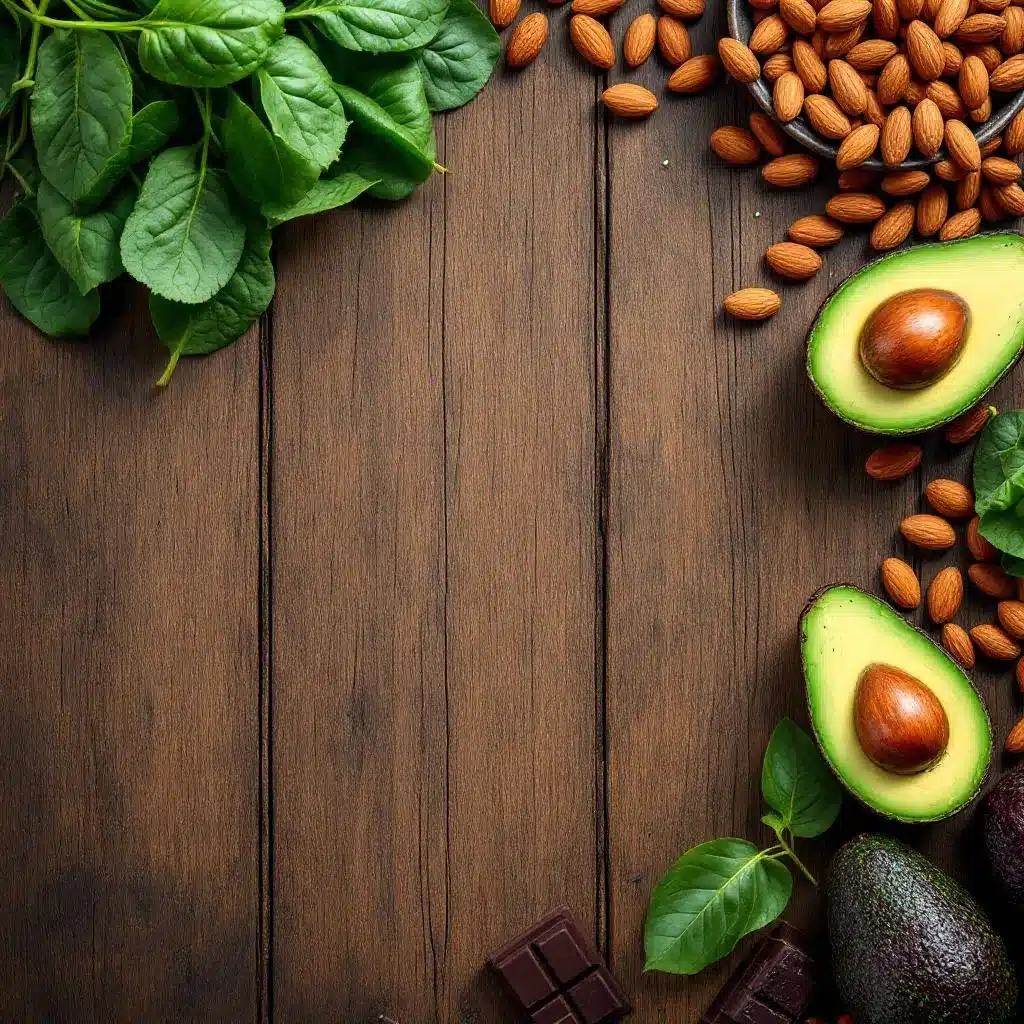
I like to call spinach a secret weapon against fatigue. Just one cup of cooked spinach is loaded with magnesium, helping your body turn food into energy for those tough workouts. And the best part? It’s incredibly versatile. You can blend a handful into your morning smoothie (you won’t even taste it!), use it as the base for a power-packed salad, or wilt it into pasta sauces and stir-fries. It’s an effortless way to reap those magnesium benefits.

2. Almonds & Pumpkin Seeds
Looking for the perfect pre- or post-workout snack? Look no further. Almonds are a fantastic source of magnesium, protein, and healthy fats—the ideal trio for muscle repair and sustained energy. A small handful is all it takes. Pumpkin seeds are another powerhouse, offering a seriously concentrated dose of magnesium. I love to sprinkle them over Greek yogurt or salads for an extra crunch and a huge nutritional boost.
3. Avocado
This creamy fruit is so much more than a trendy toast-topper; it’s a fitness lover’s dream. A medium avocado gives you a hefty dose of magnesium plus potassium, another key electrolyte that helps prevent muscle cramps. Its healthy fats also provide clean, long-lasting fuel, making it an amazing addition to any meal to support your body’s recovery and energy needs.
Simple Ways to Boost Your Magnesium Intake Naturally
Getting more magnesium in your life doesn’t require a massive diet overhaul. In fact, you probably have some of the most powerful sources of this essential mineral in your kitchen already! It’s all about making small, consistent tweaks to your daily routine.
Here are some of my favorite practical (and delicious) ways to effortlessly up your magnesium game.
1. Upgrade Your Breakfast Bowl
Why not start your day with a magnesium-packed meal? It’s so easy. Instead of a sugary cereal, try one of these swaps:
- Switch to a bowl of oatmeal or a serving of Greek yogurt.
- Then, top it with powerhouse sources like a handful of almonds or pumpkin seeds.
- Add a spoonful of chia seeds or flax seeds.
- Toss on some sliced banana.
Pro tip: Blending a cup of spinach into your morning smoothie is a fantastic—and tasteless—way to get a huge boost before you’ve even walked out the door.
2. Power Up Your Main Meals
Rethinking your base ingredients for lunch and dinner can make a huge difference.
| Instead Of… | Try This Magnesium-Rich Swap | Why It Works |
|---|---|---|
| White Rice/Pasta | Quinoa or Brown Rice | These whole grains are packed with magnesium and fiber. |
| A Plain Salad | Add a cup of Black Beans or Chickpeas | Legumes are an inexpensive and versatile way to add magnesium. |
| A Small Side | A generous helping of Steamed Spinach or Swiss Chard | Dark leafy greens are one of the best sources out there! |
It’s all about adding, not taking away. Toss lentils into your soup, add chickpeas to a curry, or simply make sure a dark green veggie has a place on your dinner plate every night.
3. Snack Smarter
When that afternoon slump hits, reach for a snack that actually works for you. Trade the cookies or chips for one of these satisfying, magnesium-rich alternatives:
- A small handful of mixed nuts (almonds, cashews, and Brazil nuts are great).
- A square or two of high-quality dark chocolate (look for 70% cacao or higher).
- An apple with a big spoonful of your favorite nut butter.
See? By making these simple food swaps, you can easily and naturally supercharge your diet. Consistency is everything, and these small changes really do add up, helping you fully enjoy the many magnesium benefits for your energy, sleep, and overall well-being.
Incorporating magnesium into your diet doesn’t have to be complicated at all. As we’ve seen, this powerhouse mineral is right there in delicious, everyday foods that can seriously boost your energy, improve how your muscles feel, and just make you feel better overall. By simply making an effort to add more leafy greens, nuts, seeds, and whole grains to your meals, you’re taking a real, proactive step towards a healthier, more vibrant you. Start exploring these options today—I think you’ll be amazed at the difference you feel.
FAQ
Why should I even care about magnesium for my body?
Think of magnesium as one of your body’s most valuable employees. It’s involved in hundreds of critical jobs, from helping your muscles and nerves function correctly to producing energy and even keeping your blood sugar and blood pressure in check. It’s a true all-rounder for your health!
What are some easy foods I can start eating to get more magnesium?
The good news is, it’s in a lot of common and delicious foods! Focus on leafy greens like spinach, nuts like almonds and cashews, seeds like pumpkin and chia, and whole grains. You can find these everywhere, and they are absolutely packed with magnesium.
Can eating more magnesium-rich foods really help with muscle fatigue and recovery after workouts?
Oh, absolutely. It can be a total game-changer. Magnesium plays a direct role in helping your muscles both contract and relax. Getting enough can make a huge difference in your post-workout recovery and help quiet down that persistent muscle fatigue.
Is it hard to get enough magnesium from food alone, or will I need supplements?
For most active people, it’s very achievable to get what you need through a balanced diet full of the foods we’ve talked about. Supplements usually only become necessary if you have a specific health condition, absorption issues, or major dietary restrictions.
How quickly can I expect to feel a difference if I start eating more magnesium-rich foods?
While everyone’s body is a little different, many people start to notice positive shifts in their energy levels, sleep quality, and muscle comfort within just a few weeks of consistently bringing more magnesium-rich foods into their diet.