Gene Therapy for Hearing Loss: Breakthroughs & Hope
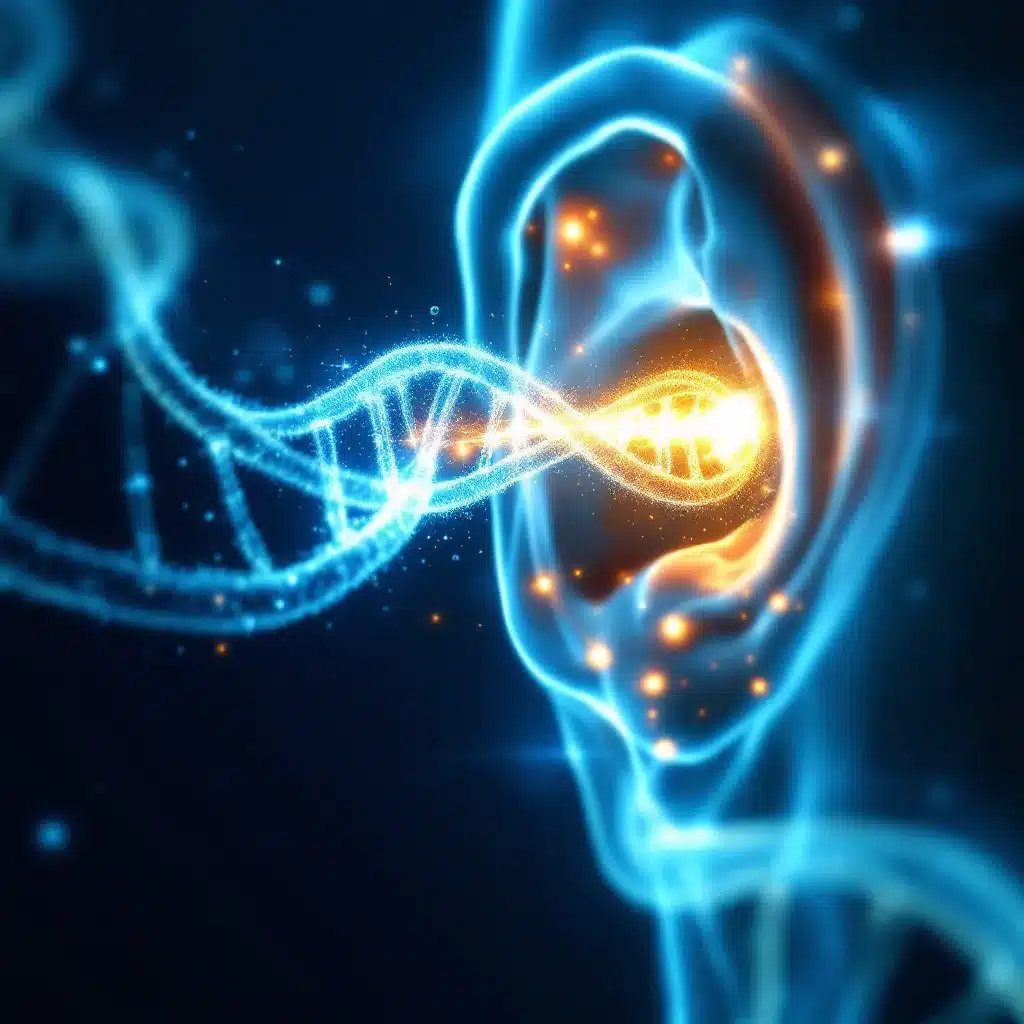
Imagine waking up to the crystal-clear sound of a loved one’s voice without having to reach for a device first. For anyone navigating a world where sound is slowly fading, traditional hearing aids and implants have long been the only options on the table. But behind the scenes, a groundbreaking shift in modern medicine is finally changing that story.
If you’ve been tirelessly searching for a more permanent, biological solution, you probably already know that gene therapy for hearing loss is no longer just a futuristic concept. It’s a rapidly advancing reality—and it’s offering genuine, life-changing hope.
We know that navigating the complex world of cutting-edge medical treatments can feel incredibly overwhelming, especially when you’re trying to find clear, factual answers for yourself or your family. It’s enough to make anyone feel defeated. That’s why we’ve put together this quick guide. We’re going to cut through the dense scientific jargon and explain exactly how this innovative approach works at a cellular level, who actually qualifies for treatment right now, and what these recent breakthroughs mean for the future of your hearing.
How Gene Therapy for Hearing Loss Works at a Cellular Level
To understand the science behind gene therapy for hearing loss, it helps to picture your DNA as a highly detailed, multi-volume instruction manual. In cases of genetic deafness, there is essentially a tiny “typo” in this manual. This biological error prevents the inner ear from producing the specific proteins required to translate sound waves into electrical signals that your brain can understand.
Think of gene therapy as a highly targeted, biological spellcheck. Instead of trying to bypass the problem with external devices, this treatment goes straight to the root cause. Its goal? To deliver a healthy, functional copy of the gene to replace or override the defective one.

But how do doctors actually get these new, healthy genes into the inner ear?
They rely on microscopic delivery vehicles known as vectors.
Scientists use harmless, modified viruses for this task because, quite frankly, viruses are natural experts at sneaking into cells. After removing any of the disease-causing elements, researchers pack these hollowed-out vectors with the healthy hearing genes. During a precise, highly specialized procedure, these loaded delivery vehicles are gently introduced into the fluid of the cochlea—the tiny, snail-shaped organ deep inside your ear. Because the inner ear is such a small, enclosed space, it makes the perfect, self-contained environment for this kind of targeted treatment.
Once inside the cochlea, the real magic happens:
- The Delivery: The vectors attach to the delicate auditory hair cells and drop off their precious cargo—the correct genetic blueprint.
- The Repair: With the proper instructions finally in place, the cells immediately get to work manufacturing the missing proteins.
- The Result: As this cellular machinery repairs itself, the sensory hair cells regain their ability to capture sound vibrations and transmit them clearly to the auditory nerve.
Through this elegant biological exchange, scientists are learning how to restore natural hearing function from the inside out.
Who Qualifies for Hearing Loss Gene Therapy Today?
When we look at gene therapy for hearing loss, it’s crucial to understand that these treatments are currently highly specialized. At this stage, gene therapy isn’t a one-size-fits-all cure for every type of hearing loss. Instead, researchers are laser-focused on addressing specific genetic mutations.
The most notable breakthroughs to date involve the OTOF gene, which is responsible for producing otoferlin—a vital protein needed to transmit sound signals from the inner ear to the brain. Right now, the most advanced clinical trials are designed specifically for individuals, primarily young children, who suffer from profound congenital deafness caused directly by mutations in this exact gene.
To help visualize where we are on this clinical timeline, here is a quick look at who this therapy is targeting, both now and in the near future:
| Target Gene/Condition | Who It Affects | Current Clinical Status |
|---|---|---|
| OTOF Mutation (Otoferlin deficiency) | Children born with profound congenital deafness | Active clinical trials with highly successful, real-world results |
| GJB2 Mutation (Connexin 26) | One of the most common causes of inherited hearing loss | Currently in development and early-stage research |
| Age-Related & Noise-Induced Damage | Adults with acquired hearing loss over time | Early-stage research and future pipeline |
So, who actually qualifies to participate today?
Currently, eligibility is strictly limited to patients who undergo comprehensive genetic testing and are confirmed to have the targeted OTOF mutation, or a handful of other rare genetic markers being studied in early-phase trials.
However, this narrow scope is just the beginning. Researchers are already hard at work developing therapies for other common genetic forms of deafness, such as those linked to the GJB2 (Connexin 26) gene, as well as future treatments for age-related and noise-induced damage. While a commercially available treatment for all types of hearing loss is still several years away, the unprecedented success of today’s OTOF trials provides a highly optimistic, realistic roadmap for the future.
Recent Breakthroughs and the Future of Genetic Treatments for Deafness
The field of audiology is undergoing a historic transformation, and it’s being driven by some truly remarkable successes in clinical trials. Over the past year, researchers have shared incredible, real-world results: they have successfully restored hearing in children born with profound, genetic deafness.
For families who have been closely following the progress of gene therapy for hearing loss, these triumphant milestones provide something invaluable: concrete, undeniable proof that cellular repair is possible.
Of course, while these breakthroughs are incredibly exciting, we need to balance our optimism with a realistic timeline. Expanding these biological solutions to cover a wider variety of genetic profiles—along with completing rigorous long-term safety studies and securing FDA approvals—means widespread public access will still take some time.
But the medical trajectory is clear. For the first time in history, we aren’t just talking about managing symptoms. A permanent, biological solution for hereditary deafness is no longer a distant scientific dream. It is a tangible, evolving reality making its way toward everyday medicine.
Gene therapy for hearing loss represents one of the most exciting frontiers in modern healthcare. While it’s still in its early chapters, the clinical breakthroughs we are seeing today show incredible promise for restoring natural hearing at its source. If you or a loved one are exploring new options, stay informed, keep hoping, and consider discussing these emerging clinical trials with your audiologist or healthcare provider today.
FAQ
How does gene therapy actually restore hearing, and can it bring back natural hearing?
Gene therapy works by delivering functional copies of a missing or mutated gene directly into the inner ear to repair and revive damaged sensory hair cells. Recent clinical breakthroughs show it can successfully restore natural biological hearing, allowing patients to hear a wide range of sounds without relying on external devices.
Who is currently eligible for this treatment, and does it work for all types of hearing loss?
Currently, eligibility is mostly limited to individuals with specific genetic forms of sensorineural hearing loss, such as mutations in the OTOF gene. While it does not yet treat age-related or noise-induced hearing loss, ongoing research is actively working to expand these therapies to broader populations.
Is the gene therapy procedure safe, and how is the treatment delivered to the ear?
The therapy is delivered via a precise, minimally invasive surgical injection directly into the inner ear (cochlea) using a modified, harmless virus to carry the healthy gene. Clinical trials have demonstrated a strong safety profile with minimal side effects, though patients are monitored long-term to ensure lasting safety.
When will gene therapy for hearing loss be FDA-approved and widely available?
While several therapies are currently showing remarkable success in mid-to-late-stage clinical trials, widespread commercial availability is estimated to be a few years away. The exact timeline depends on the speed of ongoing regulatory approvals and the completion of larger safety studies.
How can I find out if I or my child qualify for an active clinical trial?
The first step is to undergo genetic testing through an ENT specialist or geneticist to identify the specific gene mutation causing the hearing loss. Once identified, you can search registries like ClinicalTrials.gov or consult with specialized cochlear research centers to find trials matching your genetic profile.
Scientific References
- AAV1-hOTOF gene therapy for autosomal recessive deafness 9: a single-arm, co-initiated, open-label study
- Bilateral gene therapy in children with autosomal recessive deafness 9: single-arm, open-label, phase 1/2 trial
- Gene Therapy for Sensorineural Hearing Loss: Current Status and Future Directions
- Gene Therapy for Hearing Loss: Where Are We Now?
- Gene Therapy for Genetic Hearing Loss: One Step Closer